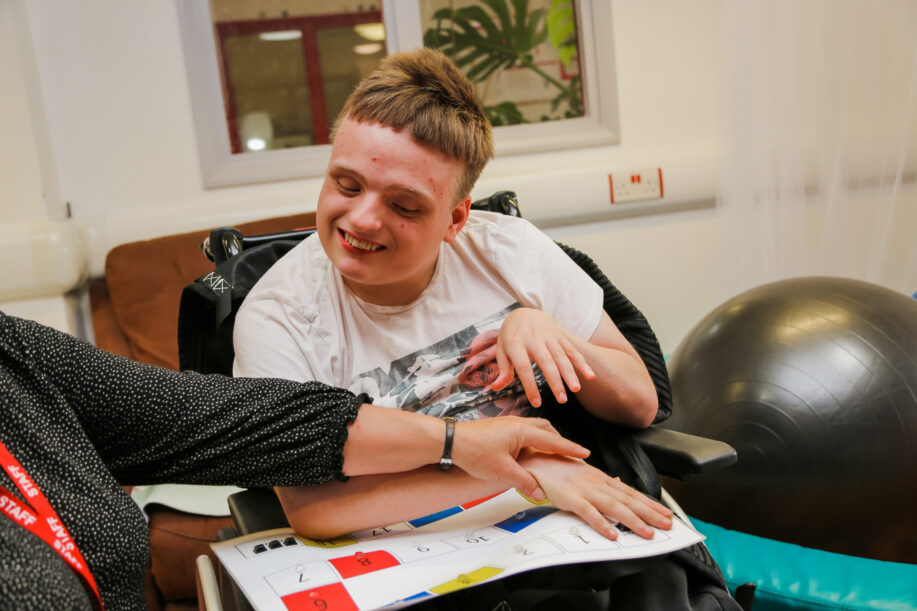
Speech and language therapy is a crucial support service for our young people. That’s why at InFocus, we provide a total communication approach for students with vision impairment and other complex needs.
This helps individuals to develop connections, ensuring successful interactions, and supports information exchanges and conversations.
Examples include:
- Sign language
- Intensive interaction
- Objects of Reference
- Symbols & other visual supports
So if you’re interested in becoming a speech & language therapist, you may be wondering what skills you need. And can you get work experience to help develop your skills? We’ll cover all this and more in this article.
Can I get work experience in speech & language therapy?
Perhaps you want to see if speech and language therapy is the right path for your future career, or you are currently studying a college course or university degree and require work experience.
Sometimes it is possible to get work experience with your local NHS teams, however, these are very few and far apart and are difficult to get hold of.
However, there are some ways that you can gain work experience without having to apply directly to an organisation. You could try volunteering, doing placements or internships, or even applying for paid work experience.
Volunteering
There are many different types of volunteering opportunities available, including working as a volunteer teacher, helping out at one of our charity shops, or supporting vulnerable children through a youth group.
You can find out about volunteering opportunities by contacting your local council, which will have details on how to access them.
Placements
If you’re looking to gain work experience within speech and language therapy, then you might consider taking up a placement.
Placements are often provided by organisations such as schools, colleges, universities, charities, and community groups.
They offer you the opportunity to gain relevant work experience in a particular field, whilst also giving you the chance to meet new people and make valuable contacts.
For example, you may be able to get experience as a language therapy assistant. This way, you can assist a trained therapist by observing their role.
Schools
It’s important to gain experience in specialist areas, such as autism and other learning disabilities. But don’t forget about the importance of gaining experience working in a mainstream classroom environment too.
This helps you prepare for working with children with additional needs later on down the road. You’ll find that you learn far more about teaching methods when you’re working alongside teachers who know what works best with each individual child.
If you decide to go straight into full-time employment once qualified, you may well find that there are opportunities for you to work in both a mainstream and specialist setting during your career. However, it’s always best to start off in a mainstream setting first.
Community Services
Volunteering with elderly people in a nursing home or retirement village gives you great insight into how a person might use communication aids and assistive technology. You learn about their needs and preferences to gain confidence in your ability to communicate effectively with this group.
Remember – Google is your best friend. A simple search can identify a whole host of opportunities in your local area.
Why consider a career in speech and language therapy?
Speech and language therapy is one of the most rewarding careers out there. You’ll be helping young people with disabilities improve their speech and communication skills, which can have a huge impact on their lives.
You’ll also learn new skills and gain valuable knowledge about the daily operations of speech and language therapy. This will help you develop your expertise in the area for the future.
What does a typical day at work look like for a speech & language therapist at InFocus?
A typical day may include:
- Meeting with our students to discuss their progress and plan future goals
- Working with children who need extra support with their speech and communication
- Assessing students using various assessment tools
- Providing advice and guidance to parents and carers
- Monitoring student progress through regular reviews
Therapy sessions usually involve one-to-one sessions, where students meet with a therapist several times over weeks or months. Some therapists work part-time, while others work full-time. However, some jobs may require you to work long hours, such as weekends or evenings.
What skills do you need to be a speech and language therapist?
Speech and language therapy is about helping people communicate better. This includes working with children and adults with disabilities and learning disorders.
It also requires skills and personal qualities, such as:
- Ability to listen carefully and understand different perspectives
- Good interpersonal skills
- Empathy
- Being patient, flexible and adaptable
- Working well under pressure
- Understanding the importance of confidentiality
Work experience at InFocus
If you’re looking to gain work experience in speech and language therapy, why not consider volunteering at InFocus? We can help you gain relevant experience in a range of settings to build and develop skills for speech and language therapy.
Furthermore, you can help us support young people with communication difficulties, allowing them to gain independence. For more information, please see our latest volunteering opportunities. Alternatively, you can email our team at enquiries@infocus-charity.org.uk.