Technology is creating exciting new opportunities for people with vision impairment, helping them access information, explore their surroundings and carry out everyday activities with greater confidence.
One example is AI glasses. Combining camera technology with artificial intelligence, these wearable devices can provide additional visual information through spoken descriptions, helping people make better sense of the world around them.
At InFocus College, we’re exploring how this technology can support our young people to develop new skills, build confidence and become more independent.
What are AI glasses?
AI glasses are wearable devices that use cameras, artificial intelligence and audio technology to help people access visual information. Depending on the device and accompanying apps, they can describe surroundings, recognise objects, read printed text and provide information about the environment.
For someone with vision impairment, this can make a real difference to everyday activities. AI glasses may help someone read a menu, identify an item on a supermarket shelf, recognise familiar objects or find information about an unfamiliar place.
Some devices can also connect users with remote assistance, allowing them to access support from another person when they need a little extra help.
While AI glasses don’t replace eyesight or remove the challenges associated with vision impairment, they offer another way of accessing information that might otherwise be difficult to see.
Exploring AI glasses at InFocus College
At InFocus College, we recognise the importance of giving young people opportunities to explore technology that could make a positive difference to their lives.
Through individual sessions with our Access Technology Tutor, students can learn about AI glasses, discover their different features and develop the skills needed to use them effectively.
This includes exploring different apps that work alongside the glasses, such as Seeing AI and Oorion, which offer a range of functions to help users access visual information.
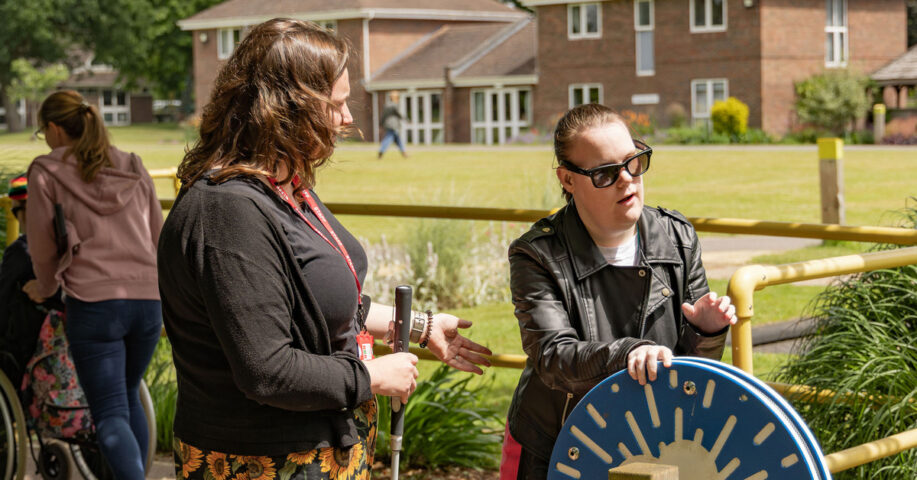
Students can learn how to use these tools to read text, identify objects and understand more about their surroundings. They also have opportunities to put their learning into practice in real-world environments.
Whether that’s exploring the college grounds, finding their way around familiar spaces or using technology to access information, these practical experiences help students understand how AI glasses could support them in their everyday lives.
Importantly, training is tailored to the individual. Every young person has different needs, abilities and aspirations, so it’s about exploring what works for them and how technology can support their personal goals.
Creating more opportunities for independence
One of the most exciting things about AI glasses is the range of ways they could be used beyond the classroom.
For young people with vision impairment, accessing visual information can sometimes mean relying on another person for assistance. AI glasses offer the potential to reduce that reliance for certain activities, giving individuals more opportunities to do things for themselves.
At home, they could help with everyday tasks such as reading packaging, identifying household items or following a recipe.
At college, they could support students to access written information, locate resources and explore their surroundings.
Out in the community, they could help with activities such as shopping, reading signs, identifying landmarks and accessing information in unfamiliar environments.
These might seem like small things, but having greater access to information can make a significant difference. It can help young people make choices, take part in activities and feel more confident trying something new.
Understanding the limitations
Although AI glasses offer exciting possibilities, it’s important to recognise that they aren’t a solution for everything.
There are practical considerations, including battery life, which can be affected by frequent use of cameras and AI features. Lighting conditions can also influence how accurately the technology recognises objects and interprets surroundings.
Cost is another consideration, with some specialist devices representing a significant investment.
There are also social and safety considerations. Wearable cameras can attract attention, and privacy concerns or misuse of recording features by others can contribute to stigma. AI technology can also make mistakes, so users need to understand its limitations, particularly when navigating unfamiliar environments or making safety-related decisions.
This is why training is so important. AI glasses should be considered alongside other assistive technology, mobility skills and appropriate support, rather than as a replacement for them.
Technology that opens up possibilities
Technology is developing rapidly, and we’re only beginning to see what AI could make possible for people with vision impairment.
At InFocus, we’re passionate about helping our young people explore new opportunities, develop skills and build confidence in their abilities. Introducing innovative technology such as AI glasses is one way we can support this.
Ultimately, it’s not about the technology itself. It’s about what it can help someone achieve: accessing information, exploring the world around them, making choices and having greater control over their everyday lives.
InFocus College
InFocus College provides specialist further education for young people with vision impairments and complex needs.
We combine traditional and emerging technologies to help our students access the world around them, develop new skills and build greater independence.
If you know a young person who could benefit from a study programme at InFocus College, we’d love to hear from you. Get in touch to find out more.