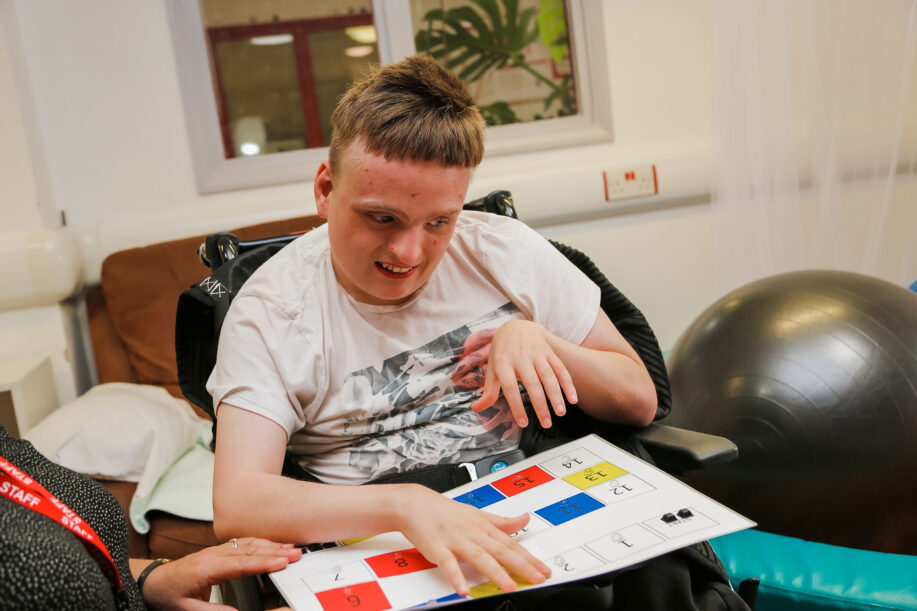
Many young people with vision impairment can develop speech and language skills, often through using other senses. They can build these skills through hearing sounds and touch.
As a vision impairment and complex needs charity, we’re dedicated to helping young people with speech, language and communication difficulties. We aim to provide high quality services that are accessible to all families.
Our skilled speech and language therapists have specialist training and experience working with children with complex communication needs. Learn more about our speech and language therapy services.
What is speech and language therapy?
Speech and language therapy is a form of support that addresses communication difficulties and disorders in individuals of all ages.
It can help those with vision impairments, but also other medical conditions such as hearing impairments, speech delays, language disorders, stuttering, swallowing difficulties and other complex needs.
Through tailored sessions, speech therapists aim to improve a person’s ability to communicate effectively and safely. Therapy may involve exercises to strengthen the muscles used in speech, strategies for understanding language, or techniques to help communicate socially.
Sessions can vary based on the needs of the person but often include a mix of one-on-one therapy, group sessions, and home practice activities.
For children, speech therapy may also incorporate play-based activities to make the learning process engaging and enjoyable. Therapists also work closely with families to ensure that strategies can be reinforced at home, promoting consistency and progress.
Helping people to communicate
Children and young adults, especially those who are visually impaired and have complex needs, can struggle to communicate, often facing challenges in daily life. It can prevent them from being able to express their feelings or ask questions. This can create feelings such as frustration, anxiety, and embarrassment for them and their families.
At InFocus, we provide a wide range of speech and language therapy services for children with vision impairment and other complex needs. Our focus is to ensure every child has a voice, no matter what disabilities or impairments they may have.
Our speech and language therapy services aim to:
- Assess your child’s current level of development
- Identify areas in need of extra support.
- Develop and maximise your child’s speech, language and communication skills
- Help integrate skills in educational, residential and social contexts
- promote access to a specialist VI curriculum
- minimise secondary difficulties arising from a communication impairment
- Support communication needs to change and develop through childhood and adolescence.
Aside from working with a speech and language therapy team, we have a Dysphagia Specialist – who manages and supports your child’s eating, drinking and swallowing needs.
Our approach to speech and language therapy
At InFocus, we follow two particular approaches for helping children develop speech and language skills…
Total Communication Approach
The Total Communication Approach is about finding and using all available communication tools to meet your child’s needs. It helps your child to develop the skills needed to connect with others, ensure successful interactions and conversations.
At InFocus, we utilise a range of methods to strengthen your child’s skills and confidence, such as:
- Sign language/tactile sign language
- Print/Braille
- Touch Cues
- Gestures
- Objects of reference
- Tactile symbols/other visual supports
Augmentative and Alternative Communication (AAC)
Augmentative and Alternative Communication covers a range of strategies, tools and techniques to help those with communication difficulties. It can involve simple tools like using pictures of word boards to use the latest computer technologies.
Examples of AAC can include:
- Signing and gestures
- Voice Output Communication Aids (VOCAs)
- Symbols/ Picture Exchange Communication Systems (PECs)
- High Tech Communication Devices
We also use individual and group-based activities to help develop:
- Social communication groups
- Language groups
- Speech sound work
- Stammering support
Can I do speech therapy at home?
As humans, we’re constantly communicating, whether in our own minds or out loud. However, for children with visual impairment, they learn and understand through touch. There are plenty of techniques and activities you can use to help improve your child’s communication skills at home.
- Talking – Just by talking to your child, they can learn and understand basic speech sounds, techniques, pitches and volume. You can also initiate conversations in which they can speak, helping them build confidence in their skills.
- Learning facial expressions – You can help your child to become aware of facial expressions to communicate. This can be done by letting your child touch your face as you make various expressions. This way your child can understand and learn basic expressions and what they mean. For example, smiling can mean you’re happy, and frowning can represent that you’re sad or unhappy.
- Looking whilst talking – Teaching your child to look towards you when they are communicating can help develop social communication skills and confidence. That way when they hear someone talking, they can identify the direction of their voice.
For more information about our speech and language therapy, please feel free to get in touch. Learn more about the specialist services we provide to support children and young people with vision impairment and complex needs – what we do.